Virgin polyester staple fiber (virgin PSF) is one of the most widely used raw materials in the global textile and nonwoven industries. While the term "polyester staple fiber" covers many variations, the word "virgin" points to a specific and important distinction: how the fiber's raw material is sourced. Understanding what sets virgin PSF apart — from its origin to its performance — helps buyers make more informed decisions when specifying fiber for their products.
Virgin PSF is manufactured from freshly polymerized polyester, built directly from two primary petrochemical inputs: PTA (purified terephthalic acid) and MEG (mono ethylene glycol). These raw materials are combined through a polymerization process to form polyester polymer, which is then processed into fiber. Because the polymer is synthesized from scratch under controlled conditions, manufacturers have close control over its purity and consistency from the very first stage of production.
This is the key difference from recycled polyester staple fiber (rPSF), which is instead produced from post-consumer or post-industrial PET, most commonly recycled plastic bottles. While rPSF offers clear sustainability advantages and has become increasingly important across the industry, virgin PSF remains the benchmark for applications where raw material purity and batch-to-batch consistency are the top priority.
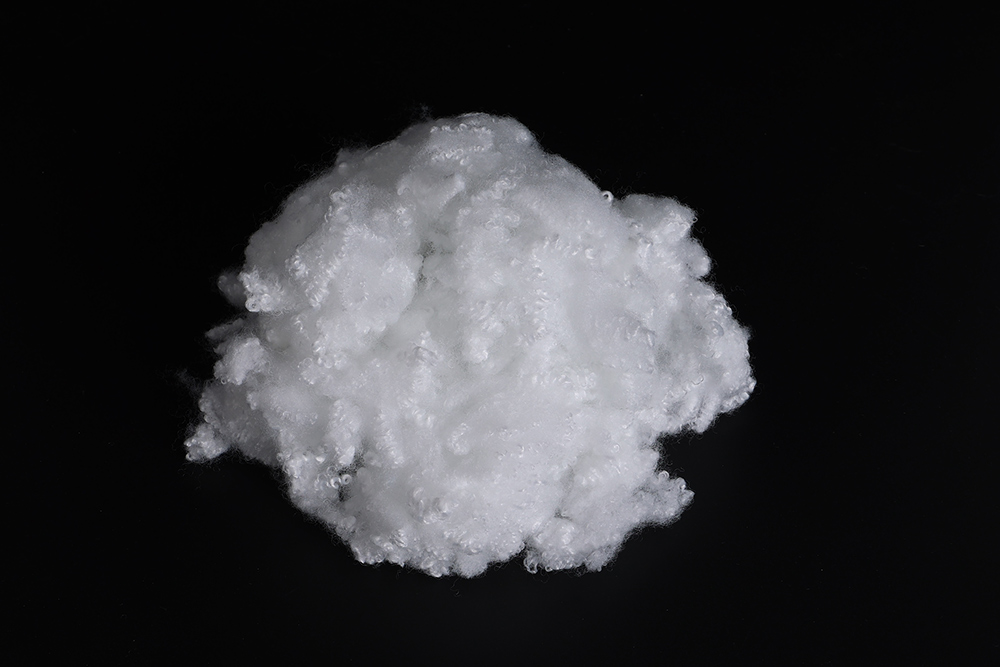
The production of virgin PSF follows a well-established sequence of steps. PTA and MEG are first polymerized into polyester chips through a continuous or batch polymerization process. These chips are then melted and extruded through spinnerets in a process known as melt spinning, forming continuous polyester filaments.
After spinning, the filaments undergo drawing, which stretches the fiber to align its internal molecular structure and develop the desired tensile strength. The fiber is then mechanically crimped to introduce waviness, improving cohesion and processability in later spinning or nonwoven stages. Finally, the tow is cut to a specified staple length, and the resulting fiber is baled for shipment.
Because the entire process starts from a single, controlled polymer source, manufacturers can more precisely manage variables such as fiber diameter, whiteness, and strength throughout production — a level of control that is more difficult to achieve when working with the more variable input streams typical of recycled feedstock.
Virgin PSF is valued in the market for several core performance characteristics.
High purity and consistency. Since the polymer is built from raw petrochemical inputs rather than reprocessed material, virgin PSF tends to contain fewer impurities, resulting in more predictable physical properties from batch to batch.
Superior whiteness and dyeability. Virgin PSF typically offers a brighter, more uniform white base, which makes it easier to achieve consistent, vibrant color results during dyeing — an important factor for light-colored or pastel textile products.
Stable strength and elongation. The controlled polymerization and drawing process gives virgin PSF reliable tensile strength and elongation values, supporting smoother performance during downstream spinning or nonwoven processing.
Good spinnability. With fewer impurities and more uniform fiber properties, virgin PSF generally runs more smoothly through carding, drawing, and spinning equipment, helping reduce breakage and downtime in production.
These properties make virgin PSF the preferred choice across several application areas:
Apparel and fashion textiles. Fine, light-colored, or performance-critical fabrics often rely on virgin PSF for its dyeability and consistent hand feel.
Home textiles. Products such as bedding, curtains, and upholstery fabrics benefit from the fiber's brightness and uniform appearance.
Medical and hygiene products. Applications requiring high material purity, such as medical nonwovens and hygiene products, often specify virgin PSF to meet strict quality and cleanliness standards.
Premium spun yarns. Yarns intended for high-end textile products frequently use virgin PSF to ensure consistent strength and a refined surface finish.
The decision between virgin and recycled PSF ultimately depends on the priorities of the specific application. When purity, whiteness, and consistent performance are critical — such as in light-colored apparel or medical-grade products — virgin PSF is typically the better fit. For applications where sustainability credentials are a primary concern and slight variations in color or purity are acceptable, recycled PSF often provides a suitable and more environmentally conscious alternative.
Many manufacturers today offer both virgin and recycled options, and some also provide blended fibers that combine the two in different ratios. Understanding the fundamentals of virgin PSF — its raw material origin, production process, and resulting properties — gives buyers a clearer basis for evaluating which option best matches their product requirements.
If you need help selecting the right fiber specification for your application, our technical team is available to provide guidance based on your product requirements.